How to Hit (and Master) the Third Shot Drop in Pickleball
If you’ve spent more than five minutes around pickleball players, chances are you’ve already heard someone talk about the third shot drop pickleball strategy like it’s some secret cheat code.
And honestly? They’re not wrong.
The pickleball third shot drop is one of the most important shots in the game. It’s the difference between staying stuck on defense at the baseline and taking control of the rally at the kitchen line. But, it’s not the easiest shot to master.
However, once you learn how to hit a third shot drop in pickleball consistently, your game instantly becomes smarter, calmer, and way more competitive.
Key Takeaways
- The pickleball third shot drop is hit on the third shot of the rally.
- The shot should land softly inside the kitchen.
- It helps the serving team move safely to the net.
- Control and placement matter more than power.
- A relaxed grip and compact swing improve consistency.
- Most advanced pickleball rallies are won at the kitchen line.
What Is a Third Shot Drop in Pickleball
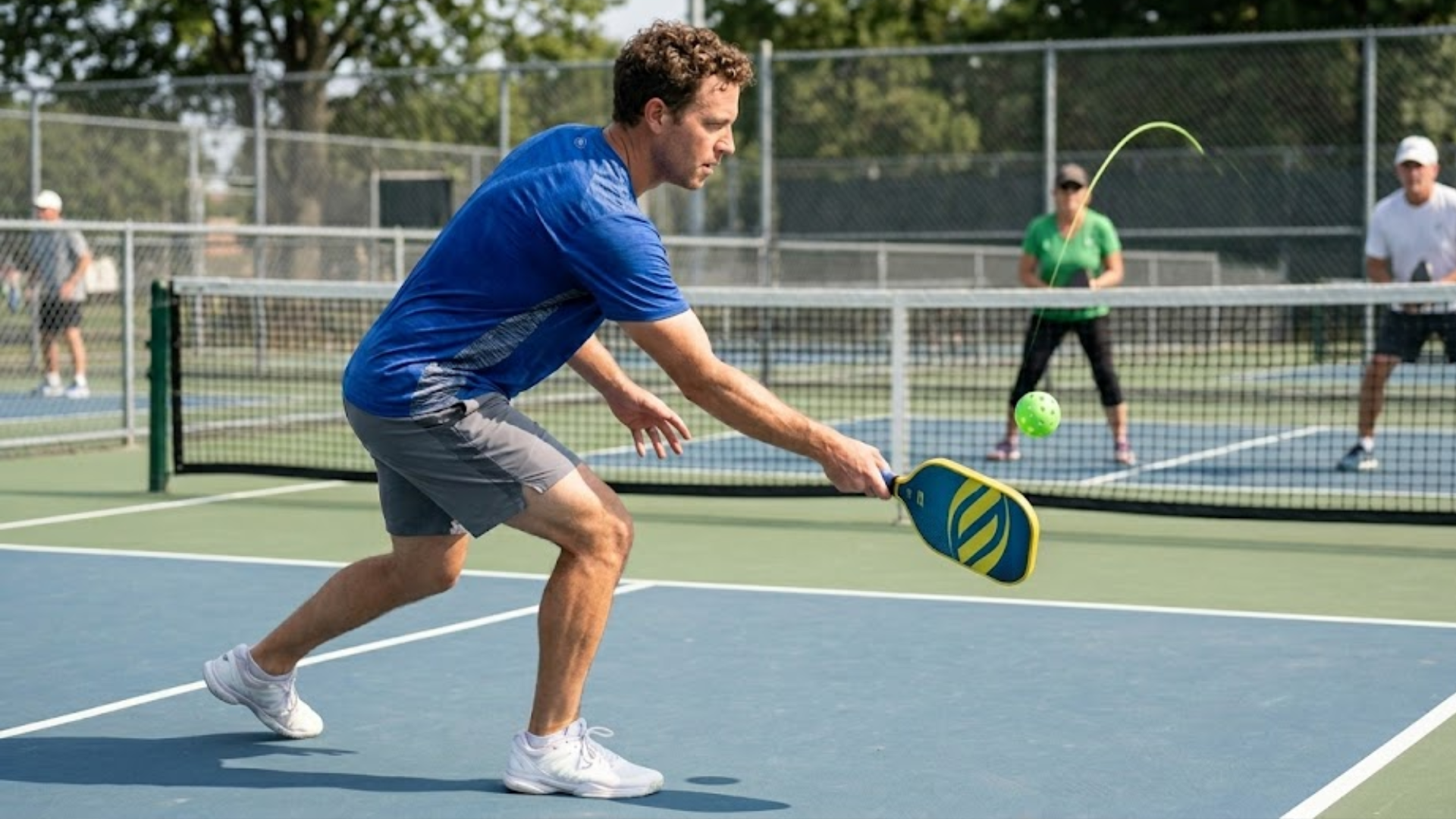
A third shot drop in pickleball is a soft, controlled shot hit from the baseline after the serve and return. The ball should arc over the pickleball net and land inside the opponent’s kitchen.
The goal is simple: neutralize the returning team’s advantage and create time to move toward the kitchen line. Unlike a drive, the third shot drop focuses on control instead of speed.
A successful third shot drop pickleball shot should:
- clear the net comfortably,
- land softly in the kitchen,
- bounce low,
- and make it difficult for your opponents to attack.
Think of it as a reset button that slows the rally down and puts you back in control.
It matters because the returning team usually has the advantage early in the rally since they’re already closer to the kitchen line. The pickleball third shot drop helps neutralize that advantage by giving you and your partner time to move up safely to the net.

Is the Third Shot Drop Important?
The third shot drop pickleball strategy is important because most points in pickleball are won near the kitchen line, not at the baseline.
If you stay too far back, opponents can pressure you with volleys, angles, and faster shots. The pickleball third shot drop allows you to slow the pace and transition forward safely.
A good drop shot helps you have:
-
Better pickleball court positioning
-
More control during rallies
-
Safer transition to the kitchen line
-
Reduced pressure from aggressive opponents
-
Higher consistency during doubles play
In our experience watching competitive doubles matches, players who consistently land quality third shot drops usually control the tempo of the game.
So, How to Hit a Third Shot Drop in Pickleball?
1. Start With the Right Positioning
After serving, stay balanced behind the baseline and prepare for the return. Keep your knees bent, paddle up, and body relaxed. You want to stay athletic and ready to move forward after the shot. A balanced setup makes it easier to control your drop.
2. Use a Semi-Open Stance
One of the best tips for hitting a consistent third shot drop pickleball shot is using a semi-open stance. This means your body is slightly turned instead of fully facing the net or standing completely sideways. It matters because it can
- kee your movement compact,
- prevents oversized swings,
- improves control,
- and helps direct the ball more accurately.
Big swings usually lead to big mistakes.
3. Keep Your Paddle in Front
A lot of players miss their drops because they take huge backswings.
For a clean pickleball third shot drop, keep your pickleball paddle in front of your body and avoid pulling it too far back. The motion should feel smooth and controlled, almost like gently lifting the ball rather than hitting it hard.
Less backswing = more consistency.
4. Relax Your Grip
This is one of the biggest secrets to a great third shot drop in pickleball.
If you grip the paddle too tightly, the ball tends to pop up or fly too deep. Instead, loosen your grip and stay relaxed. Many coaches recommend holding the paddle around a “3 out of 10” grip pressure.
Soft hands create soft shots. And soft shots are exactly what you want here!
5. Focus on Arc and Placement
The goal isn’t speed. The goal is control.
Your pickleball third shot drop should travel in a soft arc over the net and land gently inside the kitchen. A good drop forces your opponents to hit upward after the bounce, making it harder for them to attack aggressively. So, if your shot stays low after bouncing, you’re doing it right.
Common Third Shot Drop Mistakes
Even experienced players miss drops sometimes. Here are the most common mistakes players make:
- Hitting Too Hard. Trying to overpower the shot usually sends the ball too deep.
- Using Too Much Wrist. Your shoulder and arm should guide the shot, not excessive wrist flicking.
- Taking a Huge Backswing. Compact swings give you more consistency and touch.
- Aiming Too Low. Trying to barely clear the net often leads to errors. Give yourself safe net clearance.
- Rushing Forward Too Early. Hit the drop first, then move forward under control.
If you want to improve your consistency even further, check out these common pickleball mistakes players make and how to fix them.

When Should You Use a Third Shot Drop?
You should use a third shot drop in pickleball when:
- the return is deep,
- opponents are already at the kitchen line,
- you need time to transition forward,
- or you want to slow down fast rallies.
The main goal of the third shot drop pickleball strategy is to help the serving team transition safely from the baseline to the kitchen line, where most rallies are won.
Instead of trying to overpower your opponents from the backcourt, the drop shot forces them to hit upward after the bounce, making it harder for them to attack aggressively.
However, there are situations where a third shot drive might be the better option:
- when you receive a shorter return,
- when your opponents are out of position,
- or when you’re off-balance and unable to control a soft shot properly.
The best pickleball players know how to mix both shots together. Sometimes you drop. Sometimes you drive. The key is reading the rally and choosing the right shot at the right moment.
Third Shot Drop vs Third Shot Drive
|
Shot Type |
Main Goal |
Best Used When |
|
Third Shot Drop |
Slow the rally and move forward |
Opponents are set at the kitchen |
|
Third Shot Drive |
Apply pressure with speed |
Return is shorter or opponents are off-balance |
Both shots are effective. The key is knowing when to use each one.
Best Drill for Practicing the Third Shot Drop
One of the best ways to improve your pickleball third shot drop is through repetition drills.
Kitchen Target Drill
- Place targets inside the kitchen.
- Start at the baseline.
- Hit soft drops toward the targets.
- Focus on height and placement.
- Repeat consistently.
Most players improve faster by practicing controlled repetitions instead of hitting harder shots.
Master the Third Shot Drop and Control the Rally
The pickleball third shot drop is one of the most important strategic shots in the game. It helps players transition safely to the kitchen line, control the pace, and reduce pressure during rallies.
Players who master the third shot drop in pickleball usually become more consistent and more difficult to beat. So next time you step on court, don’t just swing hard and hope for the best.
Slow it down.Trust the drop. And let your strategy do the work!
FAQs About the Third Shot Drop in Pickleball
Can Beginners Learn the Third Shot Drop?
Yes. Beginners can absolutely learn the third shot drop pickleball technique. However, consistency takes time. Many new players focus too much on power early on. The third shot drop teaches patience, touch, and strategy. Remember, the more repetitions you get, the more natural the shot becomes.
Why is it called a third shot drop?
It is called a third shot drop because it is typically hit on the third shot of the rally after the serve and return.
Is the third shot drop hard to learn?
Yes. It is one of the hardest shots in pickleball because it requires control, touch, and consistency instead of power.
Should beginners use the third shot drop?
Yes. Learning the shot early helps beginners develop better strategy and court positioning.
Can you hit a third shot drive instead?
Yes. Many advanced players mix drives and drops depending on positioning and opponent pressure.
Where should the ball land on a third shot drop?
The ball should land softly inside the opponent’s kitchen near the non-volley zone.